
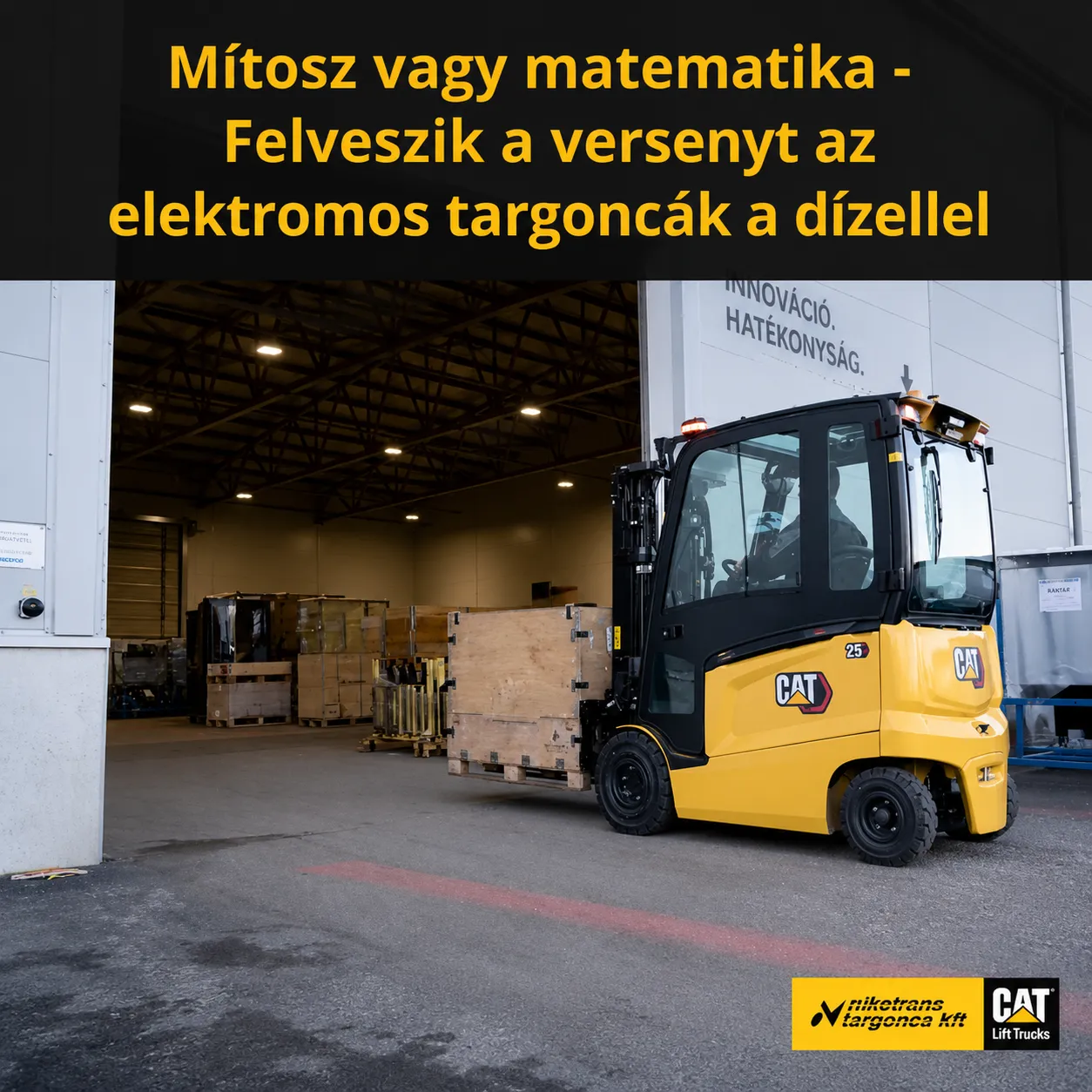
Whenever fleet modernisation comes up, one classic question is raised almost without exception: Can an electric forklift match a diesel or LPG machine for hard work, durability and power?
Based on my professional experience, my answer is clear: yes, they can compete. What is more, the latest generation of technology adds practical advantages to the equation that fundamentally change the efficiency and profitability of warehouse logistics. In the past, the switch was driven merely by tightening regulations, the need for clean indoor air or green incentives. Today, however, successful business leaders are switching for a far more pragmatic reason: higher profits and a lower total cost of ownership (TCO).
Let's take a closer look at the reality behind the numbers and the technology!
1. The hard business maths
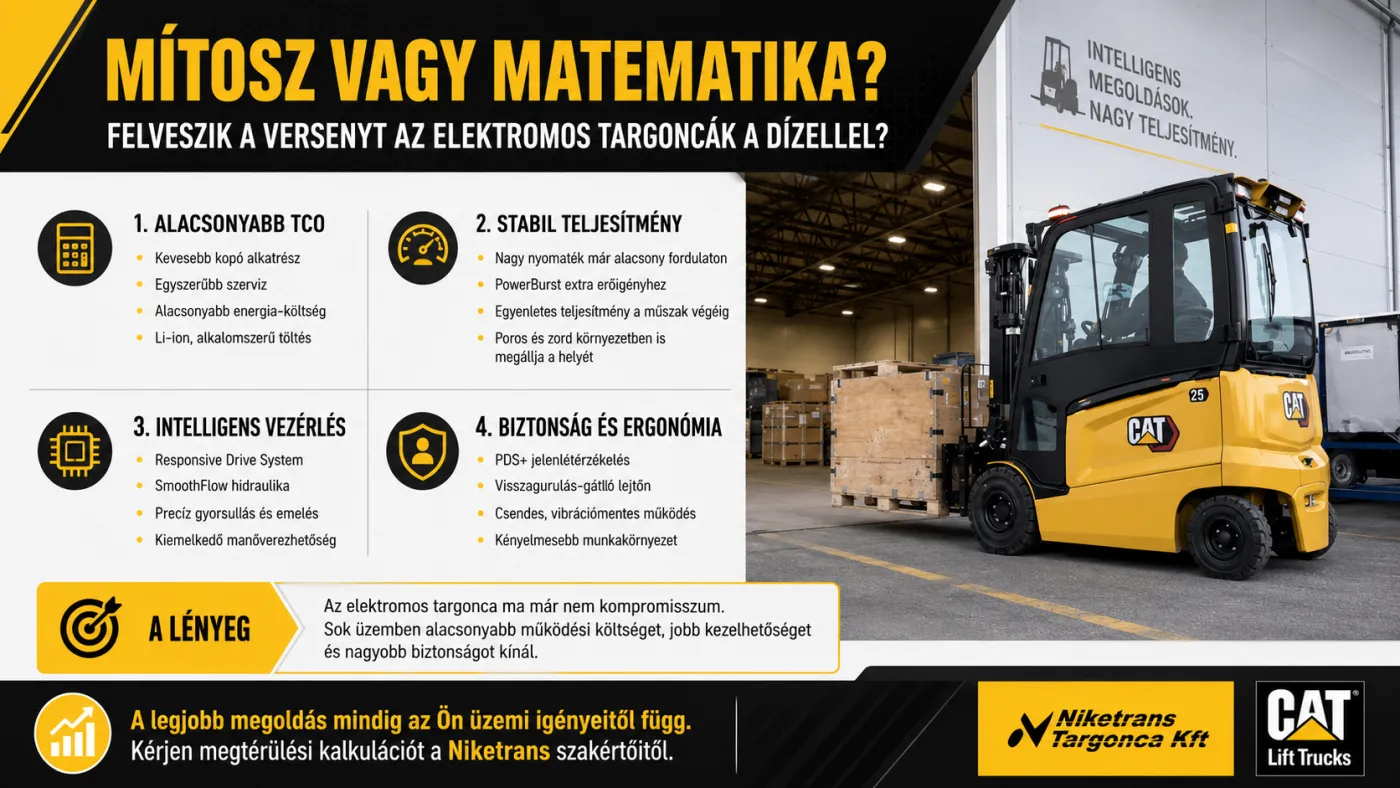
Lower TCO and simpler servicing\ One of the first things I learnt as a manager is that it is not the purchase price but the life-cycle cost that matters. Electric counterbalance forklifts have a huge head start in this respect:
- Fewer wearing parts: No engine oils, filters or spark plugs, and no need for the complex mechanical maintenance of internal combustion engines. Fewer parts mean fewer sources of faults and lower service bills.
- Intelligent diagnostics: A fundamental feature of Cat® electric machines is fast plug-in troubleshooting. The system immediately indicates if fine-tuning is needed anywhere, preventing more serious downtime.
- Fuel vs. electricity: In the long run, the cost of electricity is measurably lower than ongoing LPG or diesel bills.
This is especially true if you choose modern lithium-ion (Li-ion) technology instead of traditional lead-acid batteries. Li-ion batteries allow what is known as opportunity charging. This means the operator can put the truck on charge during a lunch break or a coffee break. There is no longer any need for cumbersome battery changes, dedicated battery charging rooms or maintenance downtime.
2. Performance that doesn't run out by the end of the shift
A common misconception is that electric drive means compromising on power. In reality, modern electric motors generate huge torque even at low speeds and allow extremely precise acceleration control.
Cat® engineers have also developed the PowerBurst function, which automatically detects when the truck needs extra power – for example on a steep ramp or when starting off with a heavy load – and delivers an instant torque boost to maintain speed. What is more, the flat voltage curve of Li-ion batteries guarantees that the forklift delivers exactly the same maximum performance in the first and the last minute of the shift.
Thanks to their robust, effectively sealed design, these machines are also ready for wet, dusty or particularly harsh conditions – there is no need to worry about them when it comes to hard work.
3. Intelligent control: when the machine works in harmony with the operator
The other key to high productivity is operator satisfaction and safety. The electronic systems of electric forklifts provide a level of support that would be physically impossible with an internal combustion engine.
- Responsive Drive System (RDS): This system continuously monitors how quickly the pedal is operated and adjusts the truck's dynamics accordingly. It smooths out starts and stops, and also adapts the steering ratio to travel speed.
- SmoothFlow hydraulics: An intelligent, load-sensing system that automatically compensates for the weight of the load. Even when the operator uses several hydraulic functions at once (e.g. lifting and tilting), fork movement remains perfectly smooth, jerk-free and safe.
- Advanced agility: On the twin-drive, 4-wheel-steer models, the rear axle can turn through +100°, so the truck can make an immediate sideways turn without having to correct by reversing. The 360-degree steering of the 3-wheel versions allows it to turn around without stopping, minimising the G-forces acting on the load.
4. People-centred safety and ergonomics
Precise control directly reduces the risk of warehouse accidents. Features such as the Presence Detection System+ (PDS+) automatically apply the parking brake and disable hydraulic movement as soon as the operator leaves the seat, while hill hold provides complete safety on slopes.
Last but not least, electric machines are incredibly quiet and vibration-free in operation. In a quiet, ergonomic working environment, colleagues are less tired by the end of the shift, which means fewer errors and measurably less sick leave for the company.
What is the best decision for your fleet?
Experience shows that the electric forklift is not a promise for the future but the most profitable business reality of today. It has a long service life, is highly programmable (ECO and PRO modes to suit the task) and retains an exceptionally high residual value on the used market.
Of course, as a strategic partner, we at Niketrans know very well that there are no one-size-fits-all answers. There are specialist applications where an internal combustion solution remains the best option. That is precisely why we also offer the full range of Cat® premium diesel and LPG forklifts. We don't want to sell a single technology; we look for a solution for your company's specific processes.
If you are about to renew your fleet, let's look at the numbers together! Contact the Niketrans team of experts and let us prepare an accurate payback calculation tailored to your operating parameters.
#niketrans #caterpillar #electricforklift #logistics #warehousing #efficiency #TCO #fleetmanagement #greenenergy #safety #business #materialshandling\